

Sunshade net is a new type of covering material made of polyethylene and other raw materials through anti-aging treatment, which has multiple functions such as blocking light, rain, moisture, and cooling. Since its promotion over the past decade, sunshade nets have been widely used in various fields such as agriculture, aquaculture, animal husbandry, construction, and daily life.
1、 Product Features and Classification
The reason why sunshade nets can be widely applied in different scenarios is due to their excellent material properties and flexible product design. At present, sunshade nets on the market can be divided into three categories according to weaving methods: round wire sunshade nets, flat wire sunshade nets, and round flat wire sunshade nets. Products sold by weight are usually made of recycled material mesh, with a service life of 2 months to 1 year. The coarse mesh is hard and has a generally high shading rate; The nets sold by area are generally made of new materials, with a service life of 3 to 5 years. They are lightweight and flexible, with a flat surface and adjustable shading rate ranging from 30% to 95%.
From a color perspective, black sunshade nets have a high shading rate and good cooling effect, but they can have a significant impact on photosynthesis and are suitable for use in leafy vegetables; The silver gray shading net has a slightly lower cooling effect, but has a smaller impact on photosynthesis and is more suitable for light loving vegetables such as eggplants and fruits. In addition, various innovative products such as reflective diffuse sunshade nets and colored sunshade nets have emerged in the market.
In terms of technical parameters, the width of conventional sunshade nets ranges from 2 meters to 12 meters, and the shading rate is generally 50% to 90%, which can also be customized according to customer needs. The product is made of polyethylene material, which has the characteristics of UV resistance, wear resistance, tear resistance, and easy assembly
2、 Core functions and advantages
The core functions of a sunshade net can be summarized as “covering, lowering, protecting, and preventing” in four aspects:
Light blocking and cooling. The primary function of a sunshade net is to block strong light and reduce temperature. Under direct sunlight in summer, the light intensity can reach 60000 to 100000 lux, while the saturation point of most vegetables is only between 30000 and 60000 lux. Covering with a sunshade net can effectively regulate the intensity of light and prevent strong light from causing damage to crops. Meanwhile, the sunshade net can also have a significant cooling effect.
Keep warm and moisturize. Covering with sunshade nets during winter and spring seasons can provide insulation and humidification. Actual tests have shown that floating surface covering at -6 ℃ can increase crop leaf temperature by about 1.5 ℃ compared to uncovered conditions. The sunshade net is lightweight (only 35 to 45 grams per square meter), does not bend crops when covered, and has a certain degree of breathability, which can reduce the occurrence of diseases.
Prevent rainstorm and wind. The shading net has good tensile strength and toughness, and can effectively resist the impact of rainstorm and wind damage. In the field of construction sites, sunshade nets are often used in conjunction with protective nets to provide sun protection, dust prevention, and isolation functions.
Reduce pest infestations. Sunshade nets can effectively prevent pest migration and reduce the occurrence of diseases and pests. In recent years, innovative products such as anti feeding sunshade nets have emerged, which achieve insect prevention by releasing special odors.
3、 Main application scenarios
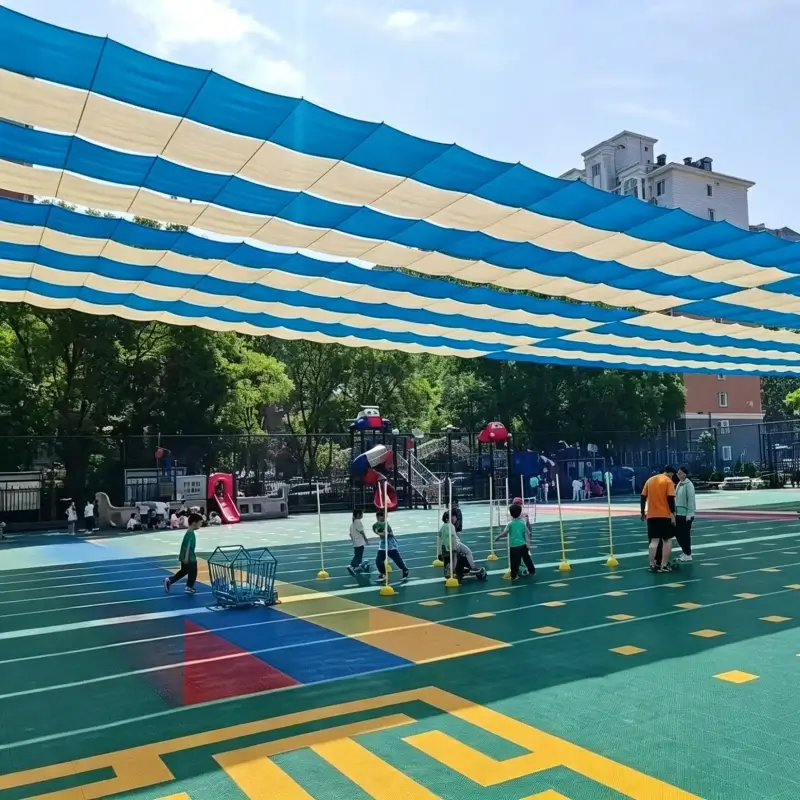
The application fields of sunshade nets are very extensive, covering multiple aspects such as agriculture, construction, and daily life.
The agricultural and horticultural fields are the main application markets for shade nets. The main forms of coverage include floating surface coverage, small arch canopy coverage, and greenhouse coverage. In the southern region during summer, using shade nets to cultivate vegetables has become a major promotion technique for disaster prevention and protection. Currently, it is mainly used for summer vegetable seedling cultivation in northern regions. Sunshade nets also play an important role in flower cultivation, fruit tree cultivation, edible mushroom cultivation, and other fields.
Aquaculture and animal husbandry. Sunshade nets can regulate crop light intensity and improve water environment. In the field of aquaculture, sunshade nets are applied to the framework of eel farming cages and water temperature regulation of sea cucumber ponds. Meanwhile, sunshade nets can also be used for shading and cooling in livestock and poultry breeding sites.
Construction field. Sunshade nets are widely used on construction sites to improve the working environment. It is often used in conjunction with protective nets and dust-proof nets, and has functions of sun protection, dust prevention, and isolation. Using shading nets and other measures to reduce the temperature in the work area during high temperature weather is an important measure to ensure the safety of construction personnel.
Daily life and commercial applications. Sunshade nets can also be used in outdoor courtyards, balconies, carports, and green plants for shade. In addition, sunshade nets can also be used as windproof cover materials to cover bare soil and suppress dust on construction sites